
Repairing a tank
Some faults can be repaired without replacing the tank, such as a leaking fitting, a pilot or burner that will not stay lit and a worn heating element. A tank that leaks from its body cannot be patched.
A water heater that runs out of hot water, leaks or will not light can be repaired, replaced or swapped for a tankless unit. In Rockwall the installation itself needs a city permit, and this page explains what that involves.
Tank and tankless options come first, then what the city’s water heater sheet asks for, and then how to read the size and age of the heater you have.
Some faults can be repaired without replacing the tank, such as a leaking fitting, a pilot or burner that will not stay lit and a worn heating element. A tank that leaks from its body cannot be patched.
Replacing a tank means choosing a size and a fuel to match the household, then installing the new heater to the city checklist described further down.
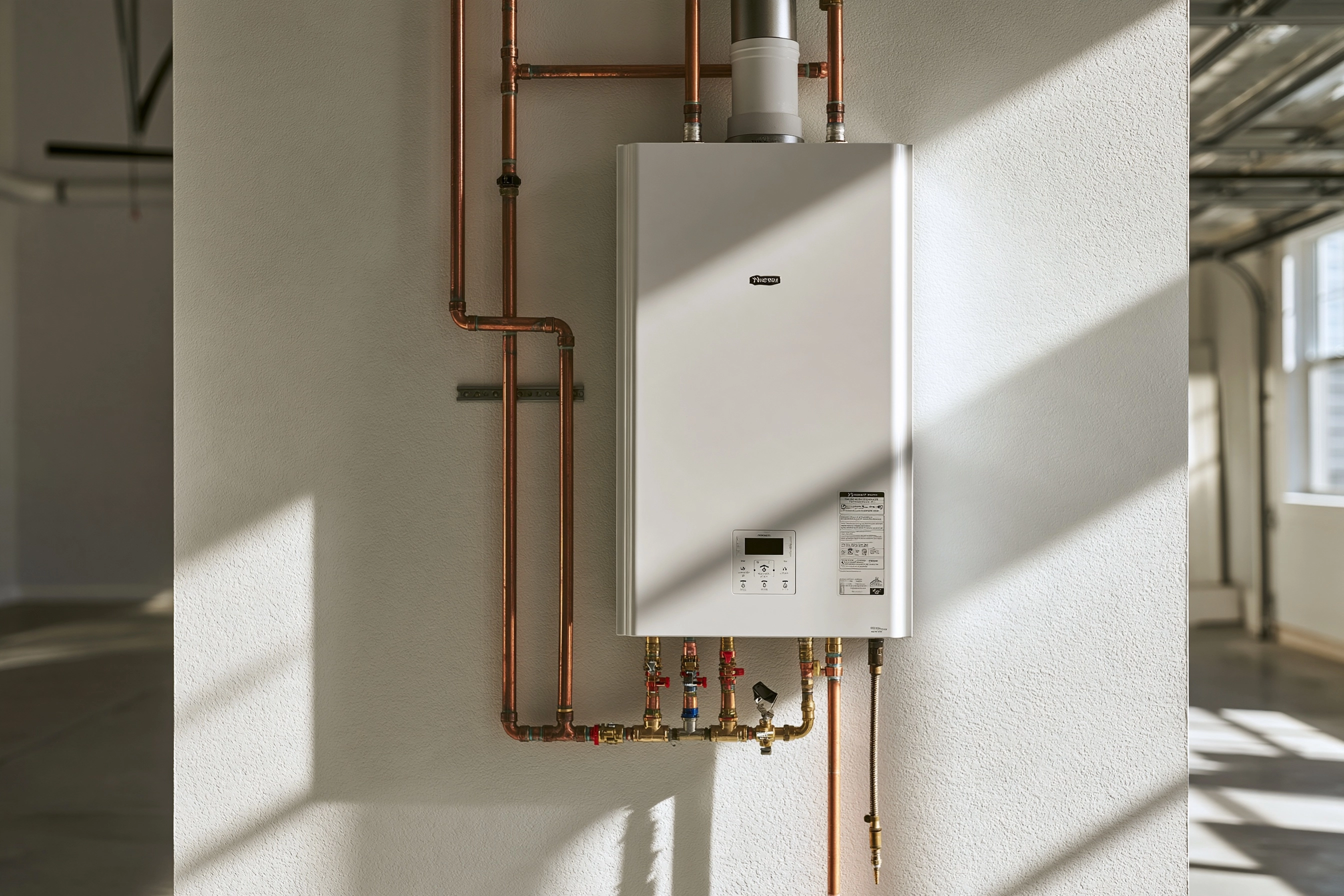
A tankless unit warms water as it passes through rather than holding a tank of it, so flow, not tank volume, is the measure of its size. Showers running at the same time decide which unit is enough.
A tankless unit can be serviced, with its water filter and heat exchanger checked and flushed by a plumber so that it keeps heating as it should.
Rockwall’s Water Heater Requirements sheet says a permit is required for all water heater installations, and inspections are booked online or by phone. A toilet or a kitchen faucet is different, since state law lets those go ahead without one.
For a Rockwall water heater, the Responsible Master Plumber in charge of the job takes out the permit and books the inspection, and the city encourages the plumber to be on site when the inspector arrives.
Drawn plans are the other part of a permit application, and the city’s plumbing permit sheet says plans are not required for replacement water heaters or gas system repairs.
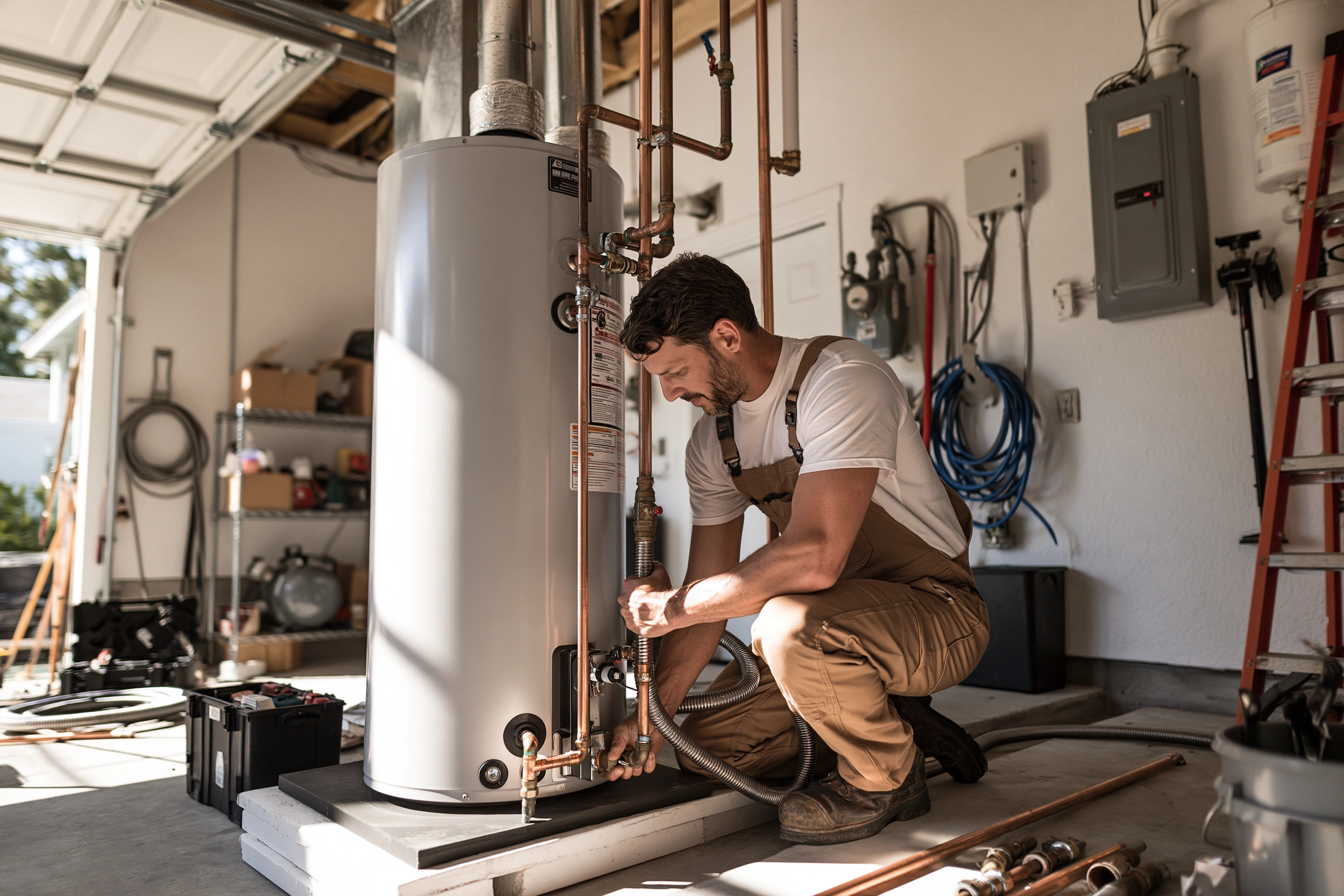
The city’s sheet sets the installation standard. The pan under the heater must be at least 1.5 inches deep with a 3/4 inch drain, and a heater in a garage must sit at least 18 inches above the floor on a platform.
The temperature and pressure relief line and the pan line are piped separately to the outside, and a corrugated flex line is not allowed for the relief valve. An existing combined relief and pan drain line is not grandfathered in.
House pressure above 80 psi calls for a pressure reducing valve, and an expansion tank is needed where a check valve, a pressure reducing valve or a backflow preventer closes the system.
Tank size follows the household, meaning how many people live there and how many hot-water uses overlap in the busiest hour. Compare the first-hour ratings on the labels, because the gallon figure alone can mislead.
Sizing runs through two free tools. The water heater size calculator is for tanks and takes household headcount and busy-hour hot-water uses, while the tankless flow calculator is for tankless units and takes the showers running together, with Rockwall’s January low as the incoming water temperature.
A heater’s serial number carries its build date in code. Feed the brand and number into the free serial number decoder, and the year it was made comes back, so the heater’s age is known before a repair or replacement is chosen.
A heater that leaks may have a leak detection question behind it, and supply lines replaced alongside it are a repiping question; the homepage lists the other services Rockwall homeowners can ask about.
Call us to discuss your current issue and how we can assist you. The call is free and you get a free, personalized estimate with no obligation. We're here to help.
Call (855) 321-3426